The sheer power and destructive nature of a large-scale fire are captured with terrifying clarity in the recently surfaced footage of a massive barn fire. This video provides a raw, unfiltered look at a rural agricultural structure completely engulfed in flames during the nighttime hours, offering a sobering reminder of how quickly fire can consume modern farming infrastructure. By examining the visual elements, smoke behavior, and structural integrity showcased in the clip, we can gain a deeper understanding of the dynamics of high-intensity agricultural fires and the unique challenges they present.
The Immediate Impact of the Barn Fire and Initial Visual Elements
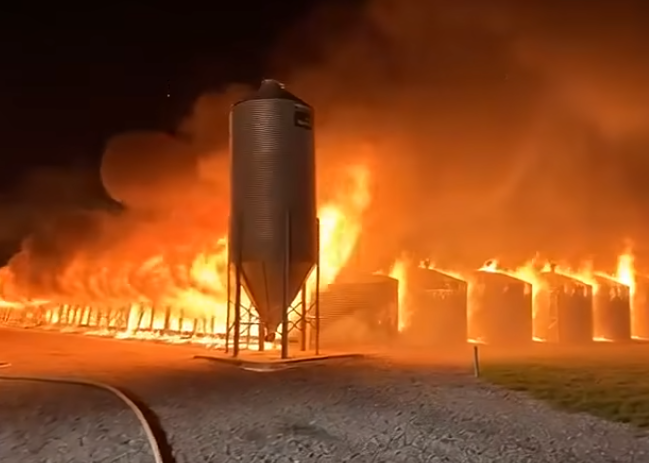
From the very first second of the footage, the viewer is confronted with a chaotic and intense scene where a long, single-story agricultural building, likely a poultry barn or livestock housing, is fully involved in a devastating barn fire. The fire has already breached the roof and walls along nearly the entire length of the structure, creating a continuous wall of vibrant orange and yellow flames that fiercely illuminate the surrounding darkness. The intensity of the thermal radiation is palpable even through the lens, as the heat creates visible turbulence in the air directly above the burning structure.
Positioned prominently in the foreground is a large, metallic cylindrical grain silo, which stands as a stark contrast to the raging inferno just feet away. The silo’s reflective surface catches the brilliant glow of the fire, creating a dramatic visual juxtaposition between the cold, industrial metal and the organic, chaotic fury of the flames. Sparks and glowing embers are seen violently erupting from the roofline, being carried upward by the thermal plume and creating a hazardous shower of secondary ignition sources that threaten nearby fields and structures. A thick, heavy blanket of dark grey and black smoke continuously billows from the building, rolling heavily into the night sky and indicating that highly combustible materials, potentially insulation, feed, or bedding, are being rapidly consumed by the fire.
Structural Compromise and the Progression of the Inferno
As the camera pans smoothly from left to right, the true scale of the agricultural property damage becomes devastatingly clear. The movement reveals that the building is not just burning in one localized area, but the fire has systematically compromised the entire length of the facility. The open bays or ventilation sections of the barn have essentially turned into individual combustion chambers, with jet-like flames roaring out of each opening. This consistent level of fire involvement suggests a highly rapid rate of flame spread, which is a common characteristic of modern agricultural buildings due to their open floor plans and the presence of significant fire loads.
The structural integrity of the barn is visibly failing in real-time as the roofline appears to be sagging and warping under the extreme temperatures, which likely exceed 1000 degrees Fahrenheit. The framing of the building, subjected to such intense thermal stress, is losing its load-bearing capacity, hinting at an imminent total collapse of the roof structure. Despite the massive scale of the fire, there is a eerie absence of active firefighting personnel or streams of water directly hitting the main body of the fire in this specific frame, though a single fire hose can be seen lying flat across the gravel driveway in the foreground. This suggests that first responders may be adopting a defensive strategy, focusing on protecting exposures like the metal silo and preventing the fire from spreading to adjacent properties rather than attempting an interior attack on a building that is already a total loss.
Environmental Factors and Strategic Firefighting Challenges
The surrounding environment played a crucial role in how this rural fire emergency unfolded, as seen by the dry gravel lot and the manicured grass lawn surrounding the facility. The clear night sky and light wind conditions, evidenced by the relatively vertical ascent of the heavy smoke plume, likely prevented the embers from spreading even further across the farm property. A white wooden fence stands remarkably close to the burning structure on the right side, completely illuminated by the firelight and serving as a boundary line for the immediate danger zone. The vast emptiness of the nighttime landscape underscores the isolation of many rural properties, highlighting the significant response times that rural volunteer fire departments often face when dispatched to incidents of this magnitude.
In conclusion, the video serves as a powerful and tragic case study in fire dynamics, illustrating the rapid consumption of commercial agricultural buildings once a fire goes undetected or uncontrolled in its early stages. The visual evidence of the massive industrial inferno destroying the barn while sparing the heavily fortified metal silo demonstrates the varying fire resistance of different agricultural materials. For fire safety professionals and agricultural operators alike, analyzing footage like this is invaluable for developing better early detection systems, improving structural fire breaks, and establishing more effective emergency response protocols to mitigate such catastrophic losses in the future.
Single Follow-Up Question
Would you like me to adjust the focus of this article to place more emphasis on specific aspects, such as agricultural fire safety measures or the technical breakdown of structural collapse?