The doctors decided to disconnect the machines that were keeping the young officer alive, but before doing so, they allowed his dog to say goodbye — and then something unexpected happened.
The police officer had been in the ICU for over a month. His body was connected to numerous machines that flickered in the dim light of the room. The diagnosis was devastating: a severe traumatic brain injury caused by an injury sustained on duty. He had lost consciousness and never woke up. The doctors did everything they could, but hope faded day by day.
That day, the medical team made a difficult decision: if there were no signs of improvement, they would turn off life support. The family had already been informed. Before taking this terrible step, they allowed their faithful friend—a small dog named Lari—into the room.
Lari was still a puppy, but she already worked with the officer in the K9 unit. They shared so much: training, night shifts, danger, mutual trust. The dog was taken to the sterile room—it moved forward cautiously, its ears drooping, its eyes wide and filled with worry and confusion.
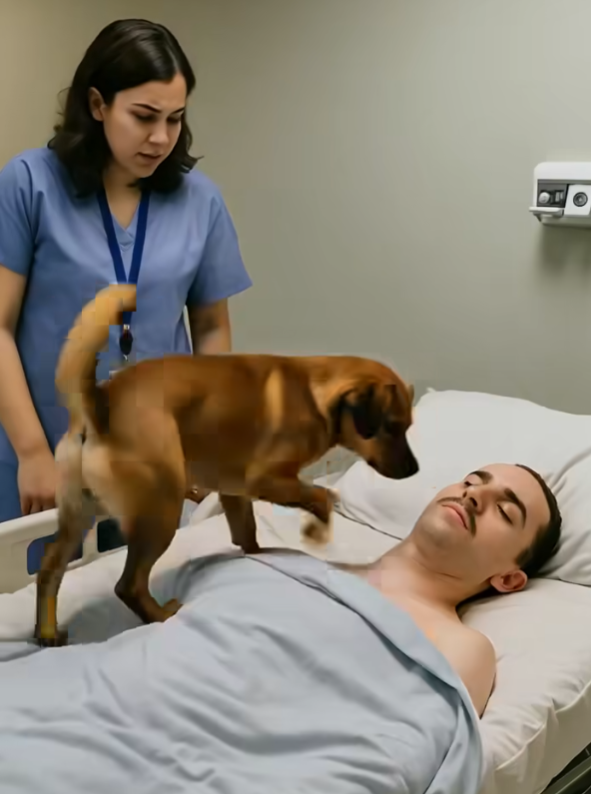
When Lari saw her owner motionless, her demeanor changed. She froze, silent, staring intently at that familiar face. A second later, she began barking loudly—high-pitched and insistent, as if calling him to wake up. Then, with unexpected energy, she jumped onto the bed, sniffed her owner’s face, and wagged her tail as if it were just another meeting after a day’s work.
Lari continued barking, licking the man’s hands, and then lay down on his chest, pressing her body against him as if trying to share her warmth. At that precise moment, something strange and unexpected happened.
Suddenly, the medical equipment emitted a high-pitched beep, and the monitors began to flash as if they had detected an unknown signal. Her heart rate increased, her breathing changed.
“What’s going on?!” a nurse shouted as she ran into the room.
The doctors burst in, alarmed. They couldn’t believe what they were seeing: the screen showed the first clear signs of spontaneous breathing.
The police officer blinked, then tried to move his fingers. The puppy barked happily and rubbed its snout against the man’s cheek, as if trying to bring him back completely to life.
No one could explain the phenomenon—perhaps the familiar smell, the voice, the dog’s presence activated the deepest mechanisms of the brain, awakening memory and the will to live.
The officer was weak, but regained consciousness, and for the first time in a long time, his gaze focused directly on the cheerful Lari. He even seemed to crack a smile.
The doctors, still recovering from their astonishment, looked at each other—and one of them said in a low voice:
“Well, friend… it seems it wasn’t in vain to have allowed him to say goodbye.”