A terrifying tsunami natural disaster video has been widely shared across digital platforms, providing a horrifyingly clear look at the absolute destructive power of nature. The shocking compilation of footage vividly illustrates what happens when a 9.1 magnitude earthquake triggers a massive tidal wave that strikes a vulnerable coastal city. In the main segment of the video, a colossal, dark wall of water swells menacingly as it approaches the shoreline under a gray, somber sky. A large white boat can be seen stranded in the background, helplessly navigating the turbulent ocean as the massive swell surges toward the land. The dark wave quickly accumulates immense force and completely overtops a heavy concrete seawall designed to protect the urban area. As the torrent spills over the coastal barrier, it smashes violently into the roadway and adjacent buildings with terrifying speed. The impact creates a massive explosion of dark, muddy spray and shattered debris that quickly blankets the entire waterfront corridor. Within seconds, the once-orderly coastal street is completely transformed into an unrecognizable zone of chaotic destruction. Onlookers can only watch in absolute horror as the immense volume of water surges inland, obliterating everything in its direct path. This dramatic sequence serves as a grim visual testament to the sheer physical limitations of human engineering when faced with a mega-thrust seismic event.
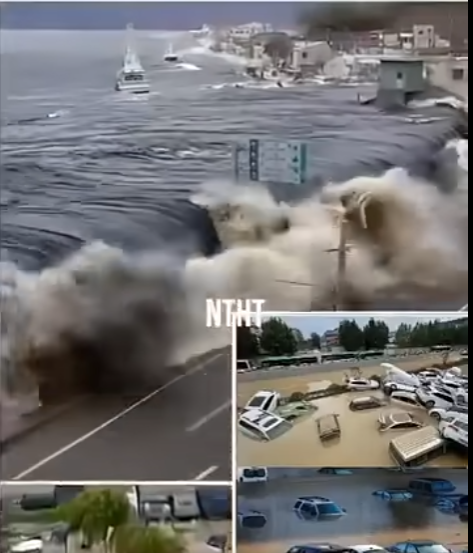
Severe Urban Flooding and Floating Vehicles in Residential Areas
As the footage transitions to analyze the broader scope of the disaster, the severe reality of coastal flooding devastation becomes painfully apparent to the audience. The lower-left segment of the video focus shifts toward an active residential or commercial street that has been completely overtaken by a furious, muddy torrent. The floodwaters rush down the urban avenue with incredible speed, carrying an immense amount of silt and debris from the damaged shoreline. Several modern vehicles, including a prominent red sedan and a white van, are seen floating helplessly like toys in the deep water. The powerful currents easily spin and drag these multi-ton cars down the flooded street, crashing them into nearby fences and submerged trees. Local infrastructure is completely overwhelmed as the water levels continue to rise rapidly against the sides of local houses. The green trees lining the sidewalk stand half-submerged, shuddering under the immense pressure of the passing aquatic deluge. This specific scene captures the terrifying speed at which an urban environment can become entirely uninhabitable due to a sudden inundation. It highlights the immediate life-threatening hazards that residents face when a tsunami breaches coastal boundaries without sufficient evacuation time. The unedited footage offers an authentic and deeply unsettling glimpse into the immediate chaos of a major natural catastrophe.
High-Density Parking Lots Transformed Into Floating Junkyards
The catastrophic impact of the event is further轉 emphasized in the lower-right quadrant of the screen, which documents an unprecedented vehicle crisis. A massive open-air parking lot or automotive storage yard has been completely converted into a deep, muddy lake. Dozens upon dozens of white, silver, and dark-colored vehicles are tightly packed together, floating aimlessly on the surface of the flood. As the water undulates and moves, the buoyant cars drift into one another, causing extensive structural damage and shattering glass. The sheer volume of submerged property on display indicates millions of dollars in economic losses within a single localized area. Water levels have risen so high that they completely submerge the wheels and reach the window frames of almost every single vehicle in the lot. This striking image of a floating automotive graveyard illustrates the widespread economic toll that follows a major seismic flood. The scene is completely devoid of human activity, suggesting that the area was thankfully evacuated before the worst of the surge arrived. However, the visual clutter of tangled, bobbing vehicles paints a vivid picture of the long-term recovery challenges facing the community. It remains one of the most iconic and frequently studied examples of asset destruction during a coastal flooding event.
The Vital Lessons of Infrastructure Resilience Against Natural Disasters
Investigating the underlying causes of this massive environmental failure requires a deep look into historical seismic data and architectural guidelines. When a mega-quake strikes off the coast, the shifting tectonic plates displace massive volumes of seawater, generating highly unpredictable wave patterns. These waves travel across the open ocean at jet-liner speeds before compressing and growing exponentially taller as they reach shallow coastal waters. The urban flood aftermath captured in this compiled clip highlights why modern civil engineers are constantly re-evaluating coastal defense designs. Traditional seawalls, while effective against standard storm surges, are often insufficient when confronting the sheer volume of a tsunami triggered by a historic earthquake. Many modern cities located along active fault lines are now investing in automated floodgates, elevated evacuation towers, and extensive early-warning siren networks. These life-saving technologies are designed to give residents precious minutes to reach higher ground before the first wave strikes. Educational institutions frequently utilize raw disaster videos to train the next generation of emergency management professionals and structural architects. By carefully studying the failure points of the infrastructure shown in the clip, researchers can develop more resilient building materials. The global community must continue to prioritize these proactive safety measures as coastal populations continue to grow worldwide.
Ultimately, the viral dissemination of this dramatic footage underscores a global fascination with the terrifying beauty and raw power of our planet. The video provides an invaluable historical record of a catastrophic event that will be studied by scientists for decades to come. It forces viewers to confront the reality of human vulnerability and the critical importance of community preparedness. The seamless blending of multiple camera perspectives in the video offers a comprehensive overview of the disaster from the initial impact to the long-term flooding. Each segment tells a unique story of survival, loss, and the sudden disruption of daily civic life. As climate patterns shift and geological pressures continue to build along major fault lines, the threat of similar disasters remains ever-present. Media platforms play a crucial role in spreading these visual warnings, ensuring that the lessons learned from past tragedies are never forgotten. The haunting images of floating cars and overtopped barriers remain burned into the collective memory of the international community. It serves as a powerful call to action for governments to heavily invest in robust, future-proof infrastructure projects. True societal resilience lies not in attempting to conquer nature, but in building smart, adaptable systems that can withstand its most violent outbursts.