The ocean has always been a vast canvas of human history, but it also guards some of the darkest secrets of modern humanitarian crises. In a single, devastating night, the sea swallowed hundreds of individuals in total darkness, a catastrophic event that the global community barely paused to notice. These were not just numbers or nameless faces designed to fill statistical reports; they were parents, children, and dreamers whose voices were abruptly silenced beneath the merciless waves. The sinking of the migrant vessel known as the Adriana represents one of the most heartbreaking maritime disasters of the 21st century, serving as a grim monument to the escalating global migration crisis and the collective failure of international border policies.
For the souls aboard the vessel, the treacherous maritime journey was not a reckless choice, but an agonizing last resort born out of absolute desperation. The passengers had already survived unimaginable horrors in their homelands, escaping the bloody, protracted devastation of the war in Syria, severe economic collapse and poverty in Pakistan, and systemic hardships across Egypt. Each person carried an invisible cargo of profound hope—families who had willingly liquidated their entire life savings, and ambitious young men who had promised to send financial lifelines back to their impoverished villages. They were all united by a singular, powerful conviction: the burning desire to secure a basic chance at a dignified, safe, and different life.
From the Perils of Libya to the Overcrowded Deck of the Adriana
Surviving the Exploitative Transit State
In the architecture of modern migration routes, North Africa often serves as a volatile geographic bottleneck. For these migrants, Libya was never intended to be a final destination, but rather a grueling purgatory where they were forced to wait for months under the constant threat of violence. The region is notorious for its severe human rights abuses, where vulnerable travelers are routinely subjected to arbitrary detention, human trafficking, financial extortion, and systemic fear. Surviving Libya was an achievement in itself, but the psychological toll of existing in constant jeopardy meant that when the fishing vessel arrived, it was not viewed as a luxury, but as the absolute last possible gateway to freedom.
The Decisive and Catastrophic Departure
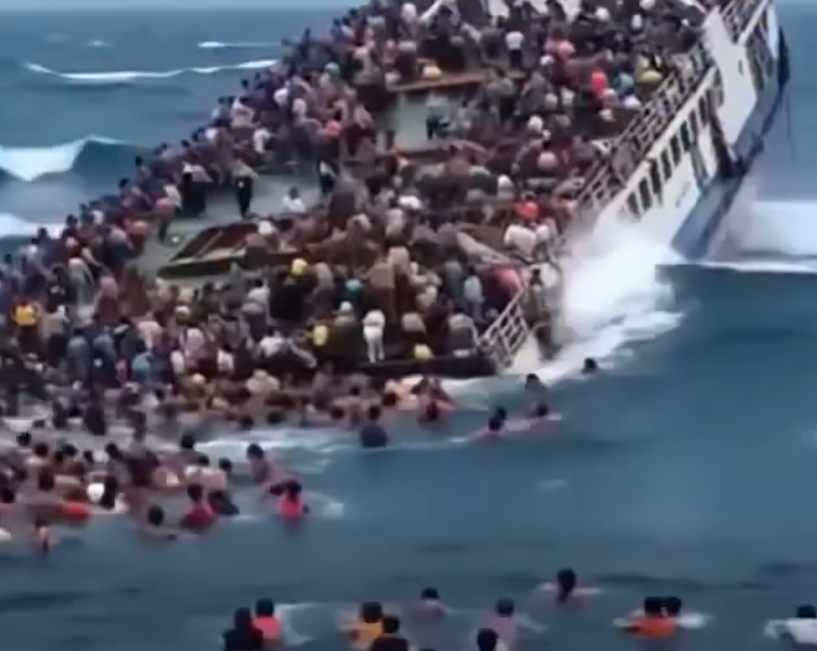
When the deeply unseaworthy fishing trawler finally pulled up to the coast, the migrants did not see a structurally sound or safe seafaring vessel. Instead, they saw a rusting, heavily overcrowded ship that represented their final opportunity to escape the Libyan living nightmare. Despite the obvious structural dangers, over seven hundred people packed themselves onto the multi-layered decks, driven by a collective determination to reach European shores. The visual image of the ship, leaning dangerously under the immense weight of human cargo, set the stage for a haunting maritime migration disaster that would soon expose the deep fractures in international rescue protocols.
Hard Questions, Political Inaction, and the Crisis of Accountability
Delays in Emergency Maritime Response
+------------------------------------------------------------------------+
|                      THE ANATOMY OF A MARITIME DISASTER               |
+------------------------------------------------------------------------+
| • Origin of Migrants: Syria (War), Pakistan (Poverty), Egypt (Hardship)|
| • Point of Transit: Libya (Exploitation, Fear, Detention)             |
| • The Vessel: The Adriana (Unseaworthy, Severely Overcrowded Trawler)  |
| • The Outcome: Sudden Capsize, Hundreds Dead, Mass Unidentified Graves|
| • Global Failure: Delayed Jurisdiction Claims, Bureaucratic Gridlock  |
+------------------------------------------------------------------------+
What transpired in the final hours leading up to the vessel’s capsize has ignited fierce international debates regarding political culpability and systemic neglect. Independent investigations and humanitarian observers argue that this mass casualty event was not merely an unavoidable natural tragedy, but a disaster heavily conditioned by political decisions and paralyzing bureaucratic delays. For hours, international coast guards and border authorities monitored the listing vessel, yet a timely, comprehensive rescue operation was never fully launched. The tragic outcome was exacerbated by blurred lines of jurisdictional responsibility, leaving the distressed vessel trapped in a deadly vacuum of institutional indifference while precious hours ticked away.
The Erasure of Individuality in Public Statistics
In the immediate aftermath of the sinking, a secondary tragedy unfolded as the vast majority of the victims remained completely unidentified, their complex lives reduced to cold metrics on official governmental ledgers. Because the vessel went down in deep international waters, recovering bodies and matching DNA profiles proved to be an administrative and physical nightmare. The sheer magnitude of the loss made it incredibly easy for the global public to look away, as individual stories of love, sacrifice, and human talent were flattened into brief news reports or sterile data points. This erasure of identity strips the deceased of their dignity, leaving grieving families thousands of miles away trapped in an agonizing limbo, forever wondering about the final moments of their loved ones.
Redefining Borders: The Urgent Need for Compassion and Global Reform
Elevating Human Value Above Border Geopolitics
“To truly honor the victims of the sea, we must look past the cold arithmetic of border statistics and recognize that every single number represents a human soul with a name, a family, and a shattered dream.”
For human rights advocates and international observers, the sinking of the vessel serves as a loud, undeniable wake-up call regarding the ethical responsibilities of nations during a humanitarian crisis at sea. The ongoing tragedy forces a critical re-examination of current border enforcement strategies, which often prioritize the security of geographic perimeters over the fundamental preservation of human life. When a vessel packed with hundreds of human beings is visibly distressed, international maritime law dictates an absolute duty to rescue, a moral imperative that must transcend the messy geopolitics of migration control and domestic policy debates.
A Lasting Reminder of What is at Stake
Ultimately, the ghost of the vessel continues to haunt the conscience of the international community, serving as a severe reminder of the ultimate stakes involved in these desperate journeys. Preventing future catastrophes requires more than just mourning the dead; it demands absolute institutional accountability, transparent investigations, global awareness, and a fundamental infusion of structural compassion into international law. Until safe, legal migration pathways are established and the root causes of conflict and poverty are addressed, the deep ocean will unfortunately continue to be a graveyard for the world’s most vulnerable travelers, making the memory of this disaster a vital catalyst for systemic global change.