Evaluating the quality and freshness of raw meat is a critical skill for everyday consumers, culinary professionals, and food safety inspectors alike. When selecting ingredients at a grocery store or preparing a meal at home, the visual appearance of raw meat serves as the primary indicator of its current state of preservation and overall safety. This comprehensive guide delves into a detailed ground beef quality analysis, examining how different portions of minced meat can exhibit contrasting colors, textures, and packaging presentations even when placed side by side. By understanding the underlying science of meat discoloration, atmospheric exposure, and safe handling practices, consumers can make highly informed decisions that protect their health and elevate their culinary experiences.
The striking variations often observed in retail meat displays highlight the dynamic biochemical nature of animal proteins post-slaughter. As minced meat is processed, packaged, and stored, it constantly interacts with its immediate environment, leading to natural alterations that may appear concerning at first glance but are frequently benign. This article will break down the visual transitions from vibrant cherry-red hues to muted brown tones, unpacking the critical role that oxygen plays in altering the surface appearance of beef. Through an in-depth exploration of these natural phenomena, readers will gain a professional perspective on how to differentiate between normal oxidation and actual spoilage, ensuring kitchen safety and reducing unnecessary food waste.
Visual Presentation and Comparative Texture Analysis of Minced Meat
Examining the Main Packaged Ground Beef Block
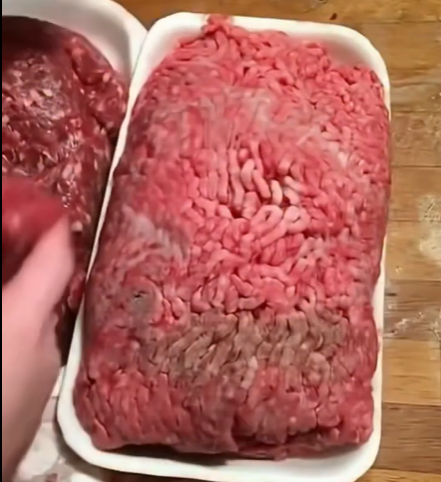
The focal point of the visual presentation centers on a large brick of freshly ground beef neatly arranged inside a standard white styrofoam tray, a classic packaging choice utilized by supermarkets worldwide to maintain structural integrity during transit. The minced meat within this container exhibits a tightly compacted, worm-like texture that is characteristic of industrial meat grinders, where the beef is extruded through a perforated metal plate to create uniform strands. The surface of this packaged block displays a predominantly pinkish-red hue, indicating a specific level of freshness and moisture retention within the muscle tissues. However, upon closer inspection, a distinct patch of darker, brownish-grey discoloration is visible along the lower front edge of the meat brick, creating a noticeable contrast against the brighter surrounding sections.
This localized variation in coloration serves as an excellent case study for understanding meat oxidation patterns and how different areas of a single meat block can react uniquely to environmental factors. The compacted strands on the top layer appear plump and well-defined, suggesting that the meat has retained its structural moisture and has not been subjected to excessive handling or mechanical pressure after the initial grinding process. The presence of the dark patch underneath the main surface layer hints at a lack of uniform air exposure or a potential variation in fat content, as different chemical compositions within the beef can accelerate or decelerate natural pigment changes over time.
Assessing the Loosely Piled Secondary Meat Mass
Immediately adjacent to the white styrofoam tray on the left-hand side rests a secondary mass of raw ground beef, which is presented in a completely different manner. Unlike the neat, compacted brick inside the container, this secondary portion is loosely piled on a patterned kitchen towel or wrapper, revealing a much deeper, dark cherry-red coloration throughout its entire structure. The strands in this loose pile appear less uniform and more organically clustered, indicating that it may have come from a different cut of beef, a separate grinding batch, or a manual preparation process that allowed more air to circulate through the individual meat fragments.
The profound difference in color saturation between the packaged brick and the loose pile immediately draws the eye, illustrating how preparation methods and storage environments dictate the visual profile of raw proteins. The deeper red tone of the uncontained meat suggests a higher concentration of natural pigments that have been fully activated by a specific level of atmospheric interaction. By comparing these two distinct configurations side by side on a wooden cutting board, consumers can vividly observe how processing styles directly influence the surface aesthetics of everyday culinary ingredients, setting the stage for a deeper scientific investigation into meat chemistry.
The Science of Meat Coloration: Myoglobin and Oxidation Dynamics
The Crucial Role of Myoglobin in Fresh Beef
To accurately interpret a raw beef color comparison, one must understand the fundamental biochemistry of animal muscle tissue and the primary protein responsible for its pigmentation, known as myoglobin. In its native state within live muscle tissue, myoglobin stores oxygen and possesses a deep purplish-brown color. When a animal is harvested and the meat is processed, this protein is exposed to the atmosphere for the first time, initiating a rapid chemical transformation. The moment oxygen binds to myoglobin, it forms a new compound called oxymyoglobin, which is responsible for the bright, vibrant cherry-red color that consumers traditionally associate with peak freshness in a retail environment.
The bright pinkish-red color visible on the upper layers of the packaged ground beef brick is a direct manifestation of oxymyoglobin formation, confirming that the surface layers have had sufficient contact with ambient oxygen to activate this visually appealing state. This coloration is highly prized by retailers because it acts as a powerful psychological trigger for shoppers, signaling a clean, healthy, and high-quality product. However, it is essential to recognize that this bright red phase is temporary and represents just one stage in the natural life cycle of raw protein exposure, rather than an absolute indicator of a meat product’s safety or nutritional value.
Decoding the Causes of Gray and Brown Discoloration
Conversely, when ground beef is deprived of oxygen or exposed to prolonged atmospheric contact without adequate preservation, a different chemical reaction takes place, converting oxymyoglobin into metmyoglobin. This chemical shift is precisely what causes raw meat to turn a muted brownish-grey color, a phenomenon that is clearly visible along the lower section of the packaged meat brick in the display. When minced meat is tightly packed together inside a container or compressed beneath upper layers, the inner sections are effectively sealed off from the outside air, preventing the formation of the bright red oxymyoglobin compound.
This internal oxygen starvation explains why a block of ground beef can often appear perfectly fresh and red on the outside, yet reveal a dull, grayish core when broken open during cooking preparation. In most scenarios, this localized grey or brown discoloration is a completely natural result of metmyoglobin development and does not indicate that the meat has spoiled or become unsafe to consume. Understanding this critical distinction allows consumers to avoid prematurely discarding perfectly viable ingredients, promoting more sustainable kitchen practices and reducing the financial burdens associated with unnecessary food waste.
Food Safety Protocols and Practical Kitchen Management
Differentiating Between Natural Oxidation and Actual Spoilage
While color variations are often a harmless result of chemical oxidation, everyday chefs must remain highly vigilant to ensure they can accurately identify true signs of food safety and spoilage. Color should never be used as the sole deciding factor when evaluating the health risks of raw ground beef; instead, it must be combined with a rigorous sensory assessment involving touch and smell. Fresh ground beef, regardless of whether it appears bright red or slightly greyish-brown due to packaging compaction, should always possess a mild, iron-like aroma and a firm, slightly moist texture that holds its shape when gently pressed.
If a portion of ground beef has truly passed its safety threshold, it will develop a distinct, sour, or ammonia-like odor that is immediately repulsive to the human olfactory senses. Furthermore, spoiled meat undergoes severe structural breakdown due to bacterial proliferation, resulting in a slimy, tacky, or excessively sticky surface texture that leaves a residue on the fingers. If the ground beef in question exhibits these tactile and aromatic warning signs alongside an extensive, dull grey color throughout the entire batch, it must be discarded immediately to prevent the risk of severe foodborne illnesses caused by harmful pathogens like E. coli or Salmonella.
Best Practices for Storing and Preparing Ground Beef
To maximize the shelf life of fresh minced meat and maintain its culinary quality, proper temperature control and storage management are absolutely paramount. Ground beef should always be kept in the coldest section of a residential refrigerator, ideally at a constant temperature of 40°F (4°C) or below, and should be prepared within one to two days of purchase to ensure optimal freshness. If a consumer does not plan to utilize the ingredient within this brief window, the meat should be transferred immediately to a heavy-duty freezer bag or vacuum-sealed wrap and stored at 0°F (-18°C) or lower, where it can safely remain preserved for several months without losing its nutritional value.
When it comes time to prepare the ground beef for cooking, thawing should always be conducted safely within the controlled environment of the refrigerator over a 24-hour period, rather than leaving the raw meat out on a room-temperature kitchen counter where surface bacteria can multiply exponentially. During the actual cooking process, utilizing a calibrated digital food thermometer is the most reliable method to guarantee absolute safety, as ground beef must always reach an internal temperature of 160°F (71°C) to completely eradicate any potential surface contaminants. By adhering to these strict preparation and storage standards, home cooks can confidently enjoy their favorite beef dishes, knowing they have successfully managed the delicate balance between natural food chemistry and impeccable kitchen safety.