Flying at 30,000 feet inherently requires a high degree of trust between passengers, flight crews, and the mechanical systems that keep a commercial airliner airborne. For the passengers aboard Alaska Airlines Flight 2221, a routine journey from Oakland, California, to Portland, Oregon, that trust was severely tested during an unexpected, high-stakes emergency. What began as a standard, uneventful West Coast flight rapidly descended into a claustrophobic crisis when an individual on board suffered a sudden and severe mental health breakdown. The resulting chaos threatened the safety of everyone on board, turning a peaceful cabin into a volatile environment where immediate action was the only barrier preventing a major tragedy.
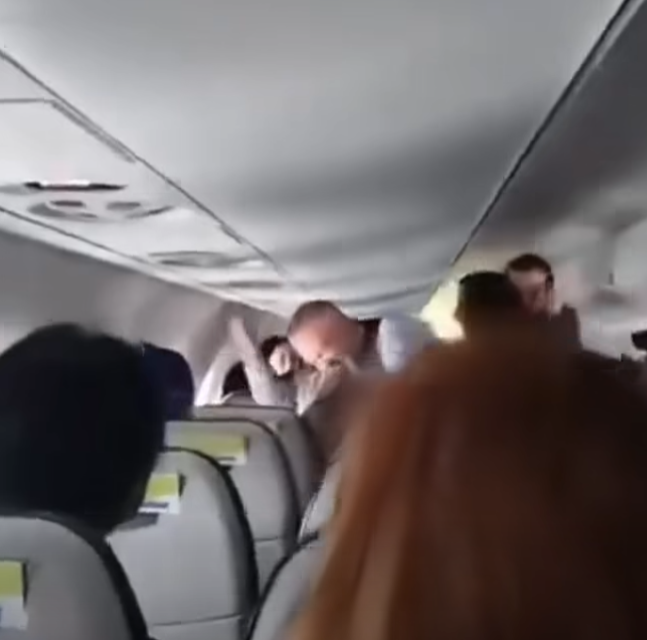
The anatomy of an inflight crisis unfolds with frightening speed, leaving no time for hesitation or second-guessing. Mid-way through the flight, a male passenger began exhibiting erratic behavior that quickly escalated into outright aggression, culminating in unprovoked physical attacks on those seated near him. In the tightly packed confines of a commercial aircraft, violence spreads panic like wildfire, as passengers realize there is nowhere to run and nowhere to hide. The sounds of shouting, scuffling, and the sudden realization of a threat thousands of feet in the air sparked immediate terror throughout the cabin, placing the responsibility of restoring order squarely on the shoulders of a few brave individuals.
Crisis Management at 30,000 Feet: The Brave Response of Crew and Passengers
Improvising Restraints Under Extreme Pressure
When standard operating procedures are challenged by the unpredictability of human behavior, resourcefulness becomes the ultimate tool for survival. As the aggressive passenger continued to pose an active threat to the cabin, the flight attendants on Alaska Airlines Flight 2221 demonstrated exceptional bravery by directly confronting the danger alongside several courageous passengers. Lacking traditional law enforcement equipment, the group had to think critically and utilize whatever tools were readily available within the cabin environment. In a brilliant display of field improvisation, they grabbed heavy-duty seatbelt extenders, transforming them into makeshift handcuffs and leg restraints to neutralize the violent individual.
Neutralizing the Threat and Restoring Cabin Order
The physical struggle to subdue an individual experiencing a psychiatric crisis is immensely dangerous, especially within the narrow aisles of an airplane. It required a coordinated effort from both the airline staff and nearby travelers to physically overpower the man without causing him or themselves severe bodily harm. By applying the improvised seatbelt restraints firmly but safely, the team successfully immobilized the disruptive passenger, effectively ending the immediate physical threat. Once the individual was secured, the flight crew worked diligently to comfort shaken passengers, de-escalate the lingering tension, and re-establish a sense of safety and structural order for the remainder of the flight.
The Aftermath and Essential Lessons in Aviation Safety
Safe Landing, Mental Health Evaluation, and Emergency Protocols
The true measure of an inflight emergency response is reflected in the final outcome once the aircraft returns to terra firma. Upon the safe landing of Alaska Airlines Flight 2221 at Portland International Airport, law enforcement officers and emergency medical personnel were already stationed at the gate, prepared to breach the aircraft. Authorities immediately detained the individual and transported him to a local medical facility for a comprehensive mental health evaluation rather than standard punitive booking, recognizing the medical underlying cause of the disturbance. Remarkably, due to the swift and precise intervention of the crew, not a single passenger or crew member sustained physical injuries during the entire harrowing ordeal.
The Invaluable Role of Preparedness and Passenger Cooperation
“In aviation, preparedness is not just a checklist; it is the boundary line between order and catastrophe when a crisis arises in the sky.”
This dramatic incident serves as a powerful case study for the commercial aviation industry regarding the profound importance of rigorous crew training and passenger cooperation. Flight attendants are trained extensively in conflict de-escalation and emergency management, but the unpredictable nature of a mid-flight breakdown proves that calm leadership is what truly saves lives. When an unexpected crisis arises in the air, the seamless teamwork between a well-trained crew and cooperative, courageous passengers can successfully avert disaster, ensuring that every soul on board makes it home safely.